
New weather stations help our team stay one step ahead of Borumba site conditions.
Five automatic weather stations have been installed to monitor local conditions and support safe access across site.
Queensland’s weather can change in a matter of minutes, making access to reliable, real-time information critical for teams working in the field.
To help monitor local conditions and support safe site access, Queensland Hydro has recently installed five automatic weather stations across the proposed Borumba Pumped Hydro Project site.
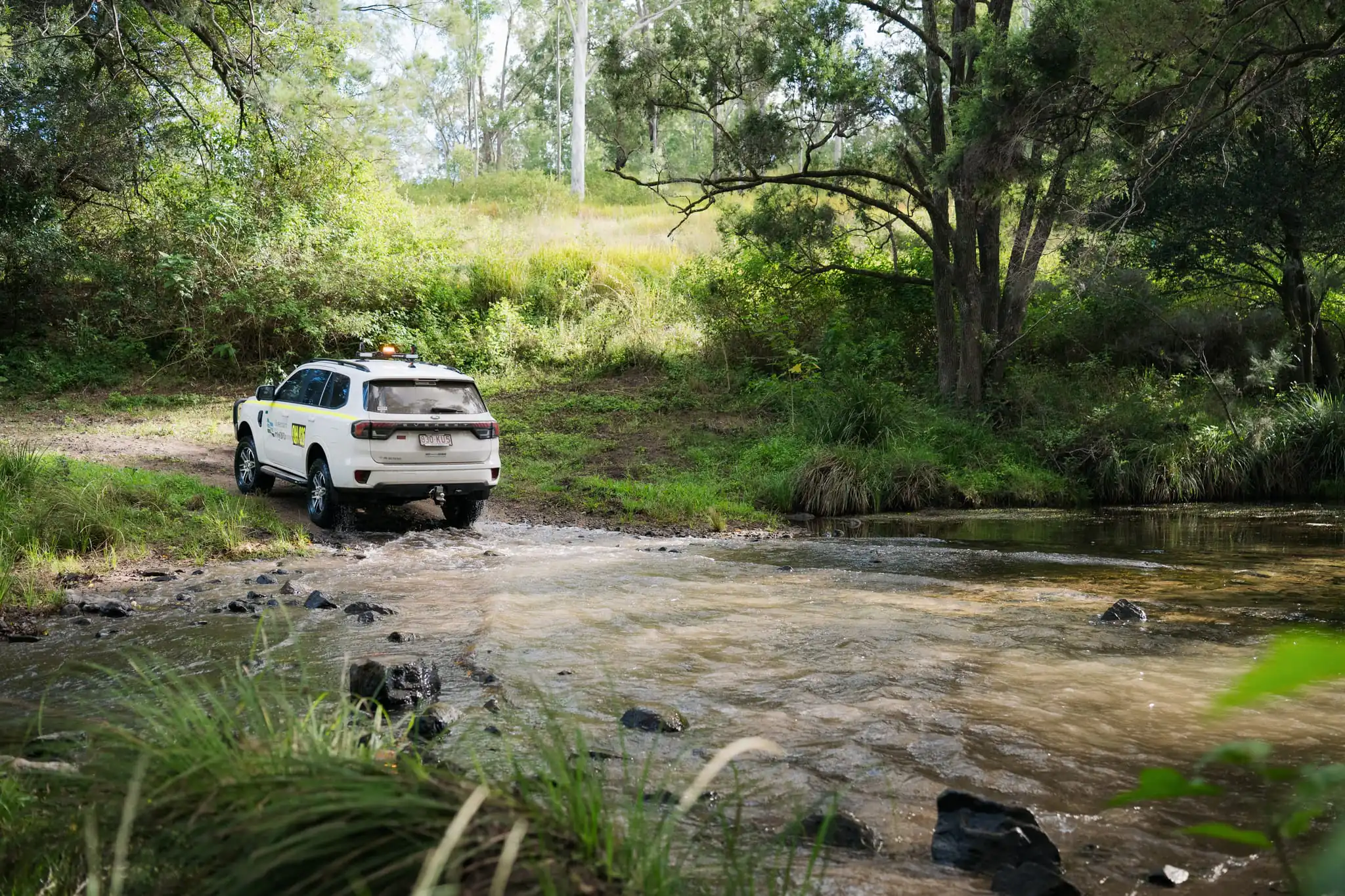
The Project area covers rugged, mountainous terrain where weather conditions can vary significantly across short distances. During heavy rainfall, water can rapidly flow into nearby creeks and low-lying crossings, affecting access routes to and from site.
Some areas are also prone to highly localised weather events, with rainfall ranging from only a few millimetres to as much as 90 millimetres in a single hour.
Accurate, real-time weather monitoring is essential to supporting safe site operations and decision-making.
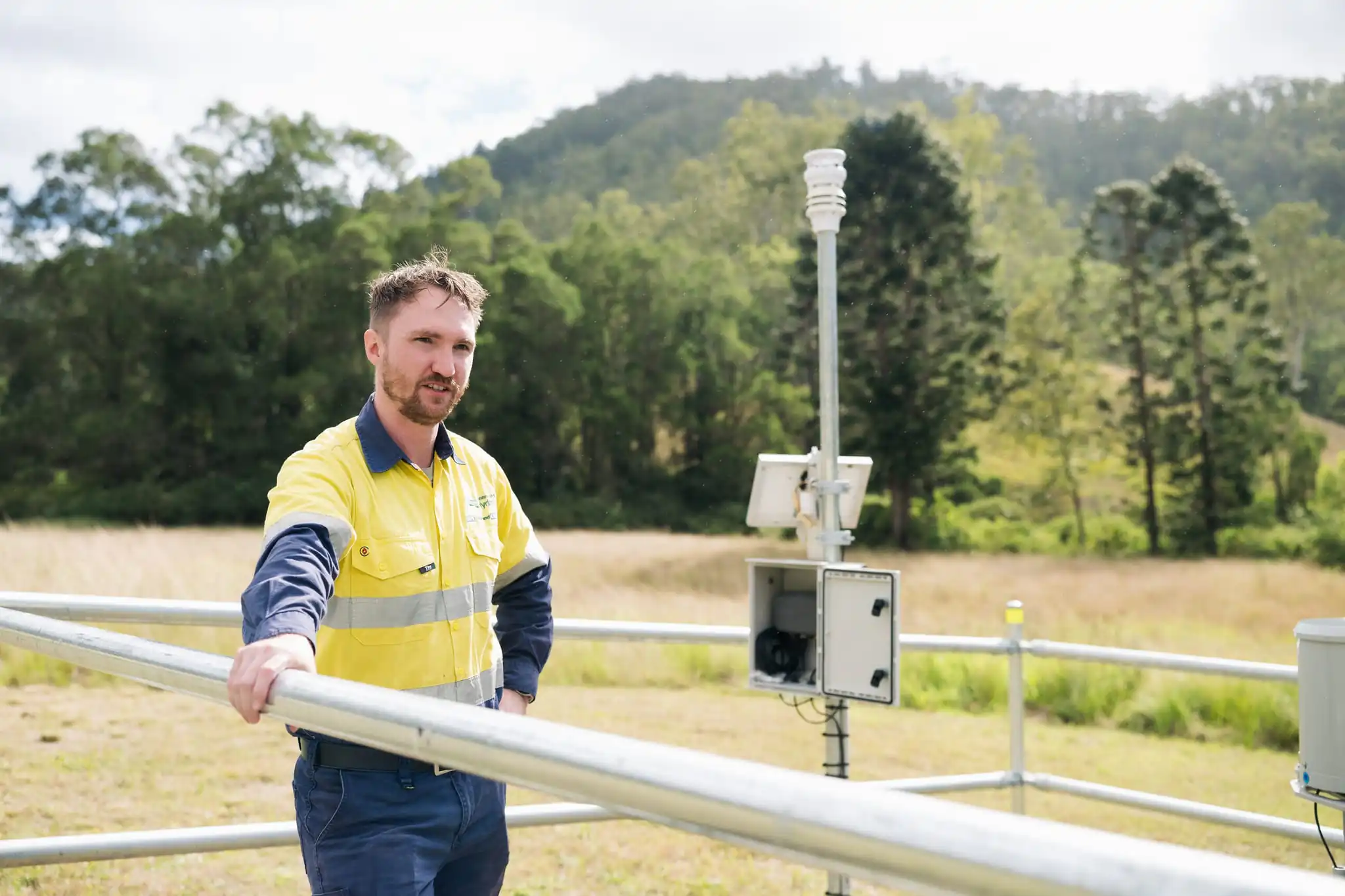
The new weather stations vary in complexity. A number are dedicated to measuring rainfall using specialised tipping bucket rain gauges, while others capture a broader range of weather information, including wind speed and direction, temperature, humidity and atmospheric pressure.
Together, they provide a comprehensive picture of conditions across the project area, helping teams better understand changes in the local environment.
Matthew Pilkington, Queensland Hydro’s Hydrology Services Lead, has been leading the rollout of the new network.
“The stations don’t just collect data – they share it too,” Matthew said. “Using satellite communications, information is transmitted directly back to us every 15 minutes, providing near real-time updates on weather conditions across the project area.”
He said the stations would continue to play an important role as conditions change across the landscape.
“As the weather changes, these quiet achievers in the landscape will continue collecting the information needed to help teams stay informed, prepared and ready to respond.”
The installation of the weather stations forms part of Queensland Hydro’s commitment to using technology and data to support safe, informed decision-making as the Borumba Pumped Hydro Project progresses through the exploratory works phase.
While their immediate value lies in improving safety and access planning, the stations will also deliver long-term benefits.
Over time, they will build a valuable dataset that will help improve understanding of local rainfall patterns, river flows and catchment behaviour, supporting future planning and environmental insight across the region.
First published 4 August 2026.